THE TECHNOLOGY
A physical secret.
Read with light.
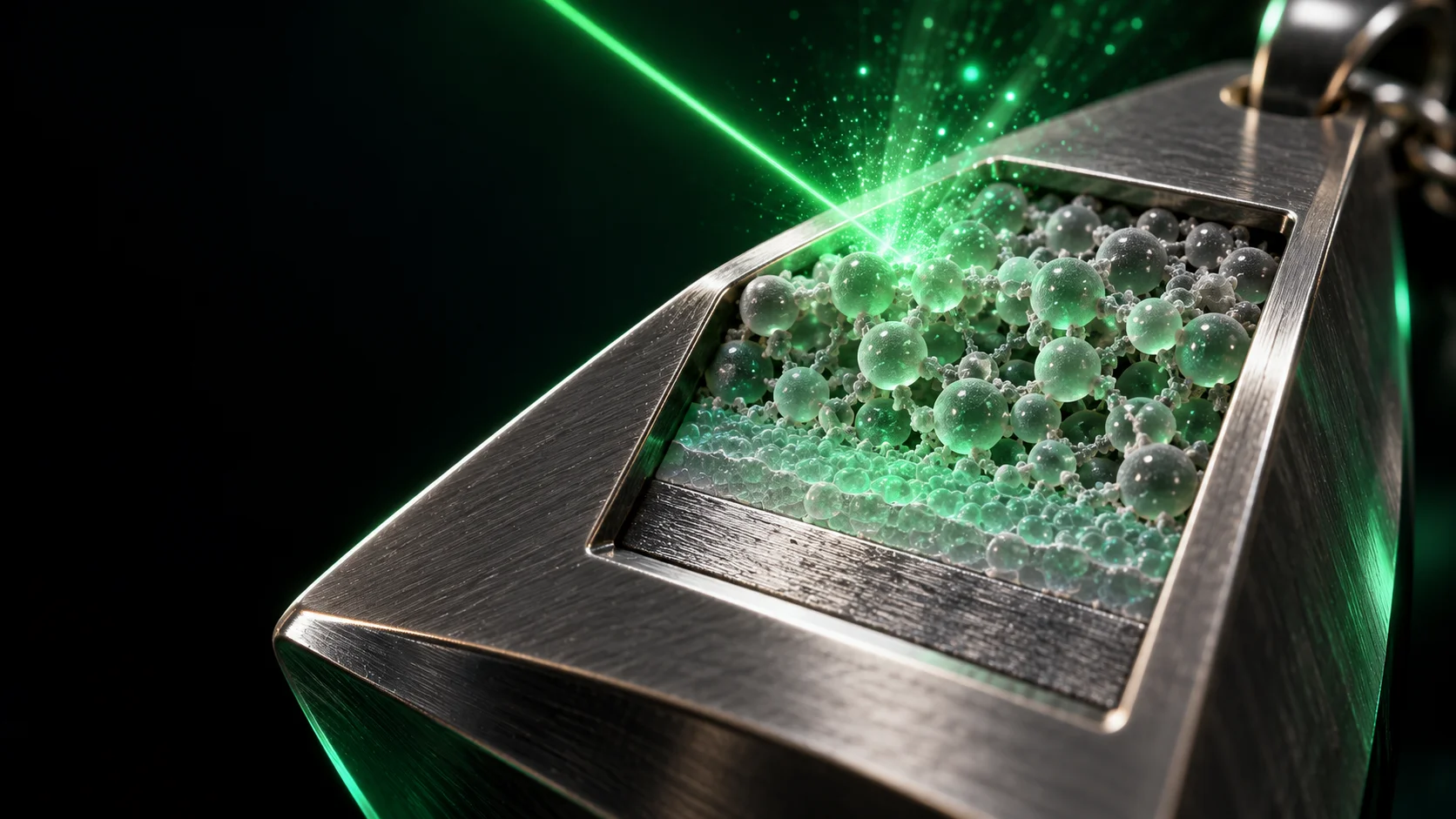
Tavelure authenticates the material inside a key. A laser reveals its random nanoparticle structure as a speckle pattern, and the reader matches that pattern to the key’s registered reference.
01 / THE OPTICAL IDENTITY
What is a speckle pattern?
A speckle pattern is the granular light-and-dark pattern formed when scattered light interferes. In Tavelure’s concept, light interacts with the irregular nanoparticle arrangement in a key’s coating. The reader captures the result and compares it with a reference recorded for that key.
The pattern is a consequence of physical structure. It is not a code printed onto the surface of the metal.
Random nanoparticle arrangement
Microscopic nanoparticles settle into a disordered three-dimensional structure within the deposited coating.
Enrolled reference
The reader checks the presented key against its previously registered optical signature.
Insert. Illuminate.
Verify. Open.
The key does more than fit. Light identifies it.
- 01
Present your key
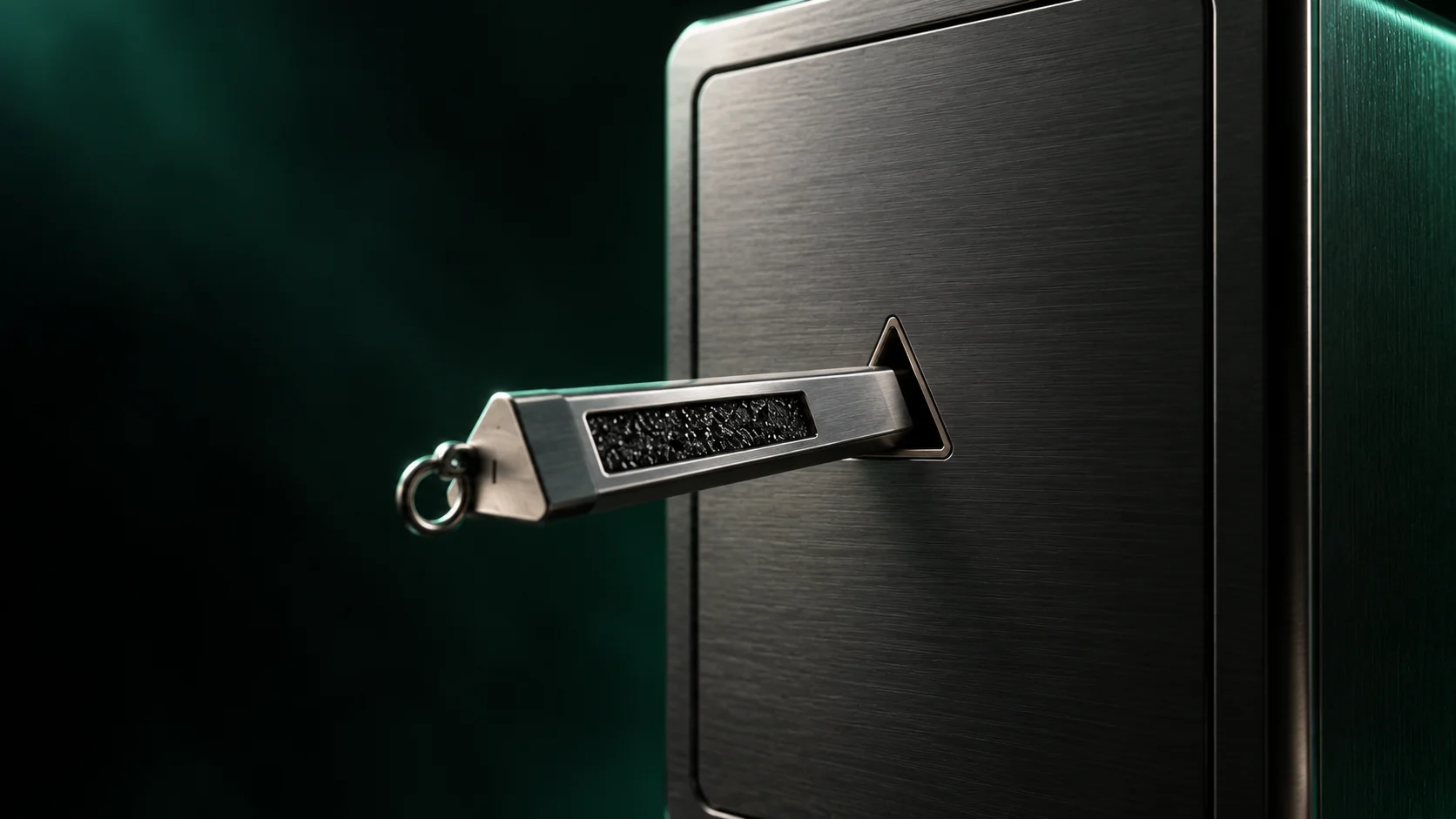
Insert the triangular pendant key into the sealed reader.
- 02
Illuminate the coating
A laser shines into the coating window. Light scattering between the nanoparticles forms a speckle pattern unique to this key.
- 03
Match the signature
The reader compares the live pattern with the key’s registered reference.
- 04
Release the lock
Only a matching pattern releases the bolt.
02 / WHY A PHOTO FAILS
Why can’t a photo or a copy open it?
A photograph records how a surface looks. Tavelure’s proposed reader measures how its own laser light scatters through the three-dimensional arrangement of nanoparticles inside the coating. A flat image does not scatter light in the same way, and a copy of the metal shape does not contain the same arrangement.
The nanoparticles settle at random when the coating is made, so no one, including Tavelure, chooses or knows their positions in advance. This is the principle behind physical unclonable functions, and the physics is explained in laser speckle explained.
See how this relates to AI-driven imitation ↗COMPLEXITY, CREATED BY NATURE
Beyond an ordinary combination.
Approximately ten raised to five million theoretical pattern combinations.
An illustration of pattern space, not a measured security strength.
What does the large pattern space prove?
The approximately 105,000,000 figure describes theoretical speckle-image combinations. It expresses a very large mathematical space. It does not by itself establish how many independent, reliably distinguishable keys a real reader can support, or how difficult a particular attack will be.
Optics, sensor noise and decision thresholds all matter to the implemented system.
Read the technical FAQs ↗FROM THE JOURNAL
Further reading.
SECURITY, MADE PERSONAL
Take the next step.
Request a pre-order. Customer verification comes before payment.